
Nursing: we’re all in the same boat

Among the board of directors, there is one department that is particularly exposed to the human challenges that the hospitals are facing: the nursing department. Recruiting and retaining staff, an ever-increasing patient flow and limited resources: the challenges are numerous.
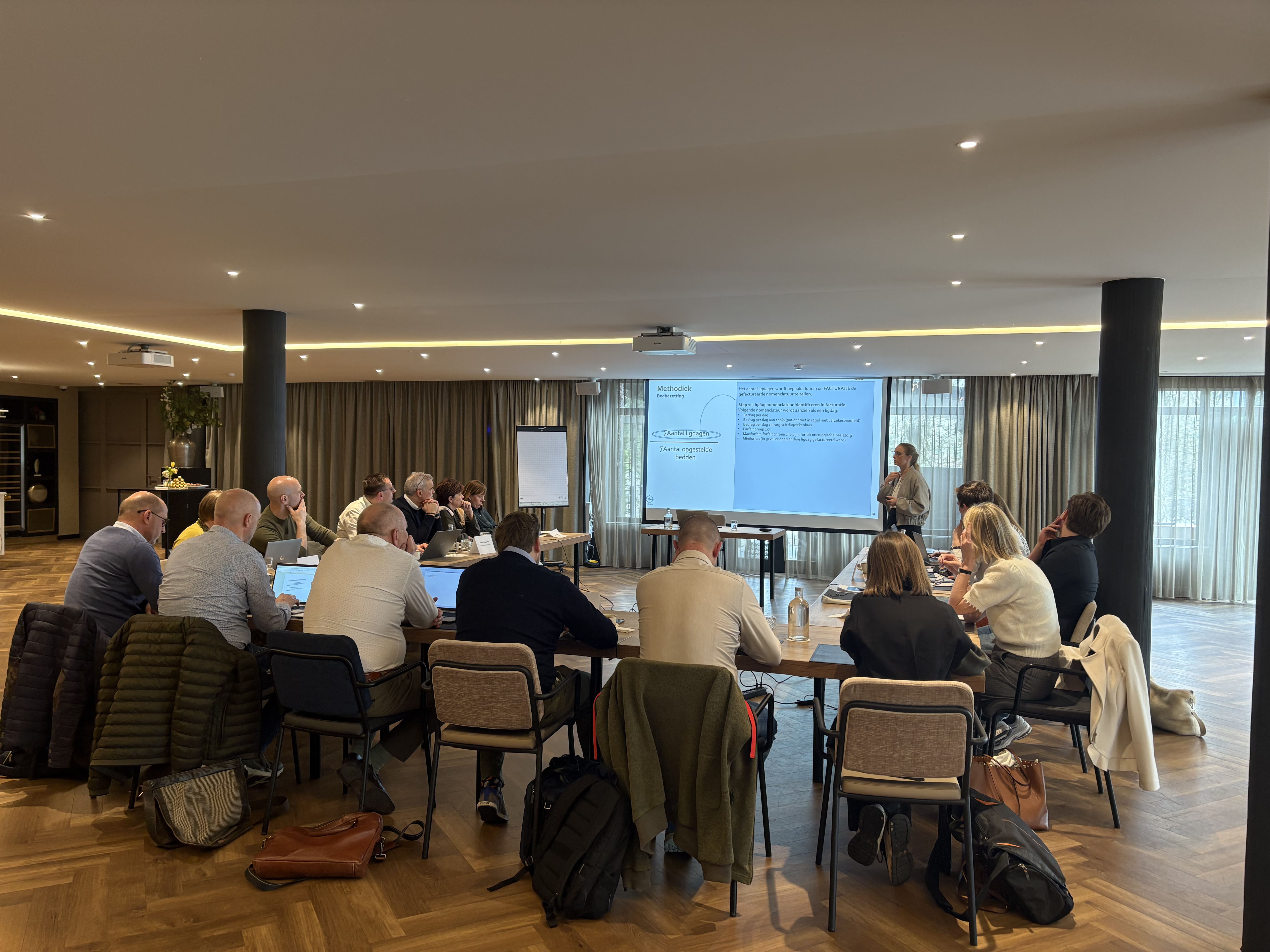
At Value4Health,we wanted to focus the development of new tools for these departments. In early April, we brought together 13 nursing directors among the users of the V4H Cockpit to present our latest work to them.
It was an opportunity to reflect together, in an informal setting, on two critical topics: bed occupancy and staff allocation.
To this end, we gave them exclusive access to the latest views available in the V4H Cockpit:
- An overview (in units and euros)of their bed occupancy and staff allocation
- A benchmark to compare general hospitals on these two critical aspects
From collective self-criticism to the sharing of best practices, this was an opportunity to fulfil our mission: create value for health.
How do you rate your nursing organisation?
This is the question that drives our participants every day. We wanted to go further. We carried out and analysed a self-assessment of the 13 hospitals involved across four criteria:
- Governance
- Systems and data
- Processes
- Culture
In this representative sample of the Belgian healthcare landscape, here are the key findings:
- Data is readily available within each institution, but it is far too rarely coordinated and shared.
- The implementation of processes based on this data is rather inconsistent
- Data culture is an area for improvement identified by many
Bed occupancy rate: a standard measure, diverse realities
The bedoccupancy rate is a standard tool, but its measurement becomes even more interesting when put into perspective alongside a dozen hospitals across thecountry. By sharing each institution’s score, we have facilitated a useful exchange of best practices
Indeed, the V4HCockpit has highlighted multiple key actions to optimise this occupancy rate:
- Considering seasonal fluctuations in activity (epidemics, holidays, etc.) is crucial when planning bed availability in many hospitals. Summer closures are common practice everywhere.
- Setting up a discharge lounge streamlines the care pathway.
- Dividing bed occupancy into two categories – ‘short stay’ (closed during weekends) and ‘long stay’ – provides clarity for staff.
- To prepare for a surge, it isbest to plan for different scenarios. Some hospitals have adopted a flexible operating model with predefined tiers of available beds depending on the day ofthe week and/or the month (e.g. 30, 45, 60). At weekends and during holidays, only 30 beds are in use. In the event of a flu epidemic, this increases to 60 beds. Each scenario is known and rehearsed. This way, if there is an unexpected peak or dip in activity, the teams are operating on familiar ground.
- Some operate with a bed quota per services, exclusively for planned care (C, D, Emergency). Other hospitals have recently abolished this system as it has a demotivating effect on staff.
Staff allocation: how to keep the team afloat?
Faced with a persistently high absenteeism rate (11.5% in 20241 ), nursing directors must be even more resourceful to ensure they have available and qualified teams.
We have compared staff allocation for each of the participants. What stands out from our discussions is that to properly compare this allocation, there are numerous site-specific factors.
- The distribution of mobile staff
- Whether or not to include logistics team staff
- Whether or not to include staff directly employed by doctors
- The inclusion of temporary staff, project managers, etc.
Once standardisation was complete, everyone was able to see where they stood inrelation to the benchmark for each department. This led to a fruitful discussion on best practices for staff management.
Among the ideas presented, here are a few best practices to explore:
- Sharing each department’s staff availability in advance and easily communicating when departments are experiencing emergencies is a good practice for defusing crises. However, it is essential to ensure the reliability of the shared data.
- Having an activity barometer tool for the emergency room. If the occupancy rate exceeds a certain threshold (for example, 70%), nursing teams from other departments are automatically notified so that, if possible, they can come and discharge patients
Governance regarding bed occupancy: how to collaborate effectively?
What emerged from the discussions was striking: none of the 13 participants had a full-timebed occupancy manager. This responsibility is shared across the institution, and this is what fosters cohesion among the teams. It is the transfer of care hub that embodies this management. It meets weekly and comprises the admissions,operating room, nursing and mobile teams.
Another idea highlighted: defining a common objective. For example: how can we ensure that 85% of patients are correctly allocated to the right department? It is by defining quality indicators in consultation with one another that cohesion is forged.
On a day-to-day basis, to monitor these indicators, this group will soon be able to rely on our latest tool, Nursing Insights, which allows them to track internally and compare staff allocation and bed occupancy.
A vibrant community of frontline professionals
This user meeting brought together key players in nursing care around a common goal: creating value for health.
One of the hot topics was the hospital reform, with its accompanying questions: “Will my hospital be able to keep its emergency department?”, “How many of my sites will have to become Local Medical Centres (CMLs)?” These will no doubt be points of discussion for the 2027 session.
Would you like to be part of this next session? Contact us!
Source:
1. Belfius MAHA sector analysis (2025)

Get in Touch with Us
Do you have questions or need assistance? Our team is here to help you optimise your hospital's operations and financial sustainability.